Affiliate Disclosure
Some of the links in this article are affiliate links. This means that if you click on a link and make a purchase, we may earn a small commission at no additional cost to you. These commissions help support the operation of our website and allow us to continue creating free, informative skincare content. We only recommend products that are relevant to the topics discussed and that we believe may provide value to our readers. However, every person’s skin is unique, so we encourage you to research products carefully and choose those that best suit your individual skin type and concerns. Thank you for supporting Souvenirs Drobe through your purchases. Your support helps us continue providing honest, high-quality skincare guides and recommendations.
Acne-prone skin routine isn’t about owning dozens of skincare products or following every trend you see on social media. It’s about understanding why breakouts happen, choosing ingredients supported by dermatology research, and building habits that your skin can tolerate consistently. Acne affects millions of people around the world. Even though many people think that acne only affects teenagers, it continues to occur among adults due to hormones, genetics, excess oils, inflammation, and environmental influences.
Luckily, the current skincare market allows you to create a skincare regimen for clearer skin without having to harm your skin barrier. Dermatology protocols suggest such ingredients as benzoyl peroxide, topical retinoids, salicylic acid, and azelaic acid for a topical use based on the severity of acne. People tend to believe that they have to use the most aggressive products to deal with breakouts. Over-exfoliation, over-cleansing, and layering several actives often harm the skin barrier, causing even more irritation and dryness. Your healthy skin reacts better to the consistency rather than strength of the ingredients used.
In this guide, we will talk about the science behind acne, explore ingredients suggested by dermatologists, and learn what each step of the routine does for your skin. When you understand the “why,” you will be able to pick the right product to include in the process.
What Actually Causes Acne?
Excess Sebum Production:
The sebaceous glands secrete sebum to keep the skin protected. But when these glands become overactive due to hormonal changes, sebum combines with skin cells in the hair follicles.
Clogged Hair Follicles:
Healthy skin continuously sheds old skin cells. If these cells don’t shed efficiently, they combine with sebum and begin blocking pores.
Small clogged pores become:
- Whiteheads (closed comedones)
- Blackheads (open comedones)
If inflammation develops, these clogged pores may progress into papules, pustules, nodules, or cysts.
Acne-Causing Bacteria:
Cutibacterium acnes is the name of a bacterium that resides naturally on human skin. When pores get blocked and the environment becomes low in oxygen content, this causes bacteria proliferation and results in inflammation. Benzoyl peroxide continues to be one of the most highly advised topical agents as it reduces bacteria and inflammation.
Inflammation:
The reason for redness, inflammation, sensitivity, and painful lesions is due to the reaction of your immune system to blocked follicles and bacteria proliferation. That is because acne is not just “dirty skin,” and excessive cleansing will not remove acne.
Genetics and Hormones:
Some people naturally produce more oil or have stronger hormonal responses that contribute to acne. Hormonal fluctuations may occur during:
- Puberty
- Menstrual cycles
- Pregnancy
- Polycystic Ovary Syndrome (PCOS)
- Periods of increased stress
While skincare cannot change genetics, selecting ingredients appropriate for acne-prone skin may help reduce the frequency and severity of breakouts over time.
Why Some Acne Routines Fail
Many routines fail not because the products are ineffective, but because they’re used incorrectly. Common mistakes include:
- Washing the face too frequently.
- Using several exfoliating acids together.
- Skipping moisturizer because skin feels oily.
- Not wearing sunscreen while using retinoids or exfoliating acids.
- Expecting noticeable improvement within a few days.
- Constantly changing products before giving them enough time to work.
The American Academy of Dermatology advises sticking with an acne treatment consistently because visible improvement often takes weeks to months, and repeatedly switching products can increase irritation.
Building an Acne-Prone Skin Routine That Supports Your Skin Barrier
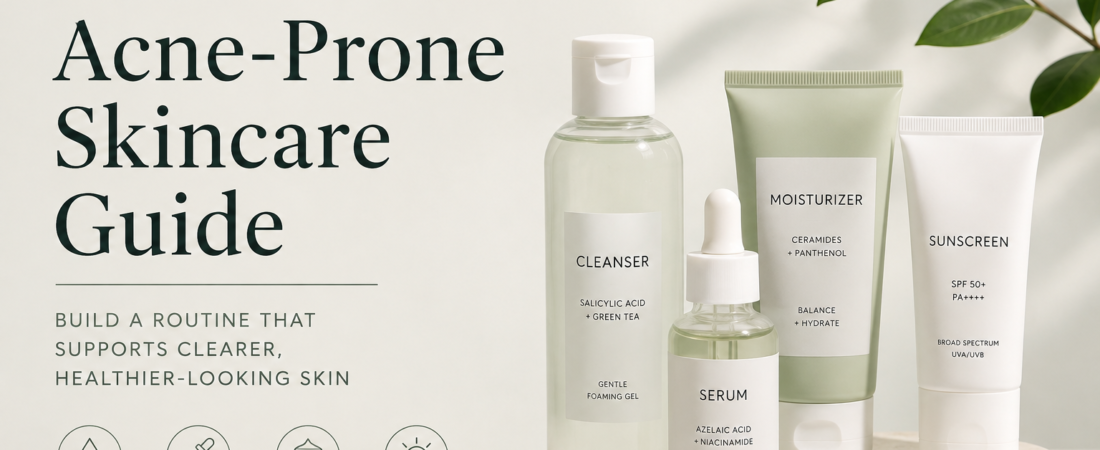
A successful skincare routine isn’t determined by how many products you own. It’s determined by whether each product has a clear purpose. Think of your routine in five simple jobs:
- Remove dirt, sunscreen, and excess oil.
- Keep pores clear.
- Calm inflammation.
- Maintain hydration.
- Protect skin from ultraviolet damage.
When these goals work together, your skin barrier is less likely to become irritated, allowing acne treatments to perform more effectively. A beginner-friendly routine generally follows this order:
Morning
- Cleanser
- Toner (optional)
- Treatment serum
- Moisturizer
- Sunscreen
Evening
- Cleanser
- Toner
- Treatment serum
- Spot treatment
- Moisturizer
- Pimple patch (when needed)
Rather than introducing every active ingredient immediately, add one product every two to three weeks whenever possible. This makes it easier to identify irritation or sensitivity if it occurs.
“Understanding Cleansers for Acne-Prone Skin”
Your skin collects sunscreen, sweat, pollution, extra sebum, and dirt throughout the day. A good cleanser is able to get rid of all these elements without stripping the skin of its natural protective barrier. If you use too harsh of a cleanser on your face, you can end up with a feeling of your skin being extremely clean – squeaky clean. This usually means that too many lipids from your skin were stripped away.
For acne-prone skin, ingredients commonly recommended include:
- Salicylic Acid
- Ceramides
- Niacinamide
- Hyaluronic Acid
- Panthenol
- Green Tea Extract
Product:1 (REMEDY Gel-to-Foam Cleanser)
Developed with acne-prone and sensitive skin in mind, this cleanser combines gentle cleansing with ingredients that help remove excess oil while supporting the skin barrier. Instead of relying on harsh surfactants alone, it balances exfoliation with hydration.
Key Ingredients Explained
Salicylic Acid is a beta-hydroxy acid (BHA) that penetrates oil-filled pores and helps loosen dead skin cells.
Ceramides help reinforce the skin’s natural protective barrier, reducing the dryness that can accompany acne treatments.
Green Tea Extract contains antioxidant compounds that may help soothe the appearance of irritated skin.
Suitable Skin Types
- Oily skin
- Combination skin
- Acne-prone skin
- Sensitive skin
Why It Fits This Routine
For beginners building an acne-focused routine, this cleanser offers an effective balance between pore-cleansing ingredients and barrier-supporting hydration, making it suitable for daily use without feeling overly aggressive.
Check the price on Amazon: REMEDY Gel-to-Foam Cleanser
Product:2 (CeraVe Acne Foaming Cream Wash)
This cleanser is made up of 10% benzoyl peroxide, which is an ingredient that dermatologists have been recommending for many years now since it helps reduce bacteria causing acne and inflammatory breakouts. The cleanser also has moisturizing agents which act to counteract the effects of drying caused by benzoyl peroxide. According to dermatology advice, benzoyl peroxide is very powerful but less strength can also work.
Key Ingredients Explained
Benzoyl Peroxide helps reduce acne-causing bacteria and inflammation.
Niacinamide supports the skin barrier and may reduce the appearance of redness.
Hyaluronic Acid attracts water to the skin without adding oil.
Suitable Skin Types
- Oily skin
- Moderate acne
- Combination skin
- Breakout-prone skin
Why It Fits This Routine
People experiencing recurring inflammatory pimples often benefit from incorporating benzoyl peroxide into their routine. Pairing it with moisturizer helps maintain skin comfort while supporting long-term consistency.
Check the price on Amazon: CeraVe Acne Foaming Cream Wash
Do You Really Need a Toner?
Toners have undergone many changes in the past ten years. In the old days, most toners had a lot of alcohol that made the skin feel dry. Though this was thought to be good, because of the drying effects, they could harm the skin’s barrier, which leads to skin irritation among those who use acne products.
Nowadays, toners perform various roles, depending on the ingredients they are made from. Some of them hydrate the skin, while others have exfoliating acids that enhance the skin’s texture and clear the pores. The reason for applying them is dependent on individual needs and not necessarily part of everyone’s skincare routine. If you are using an active ingredient in your cleanser, be careful with the toner you apply. It could cause more irritation without offering any added value.
Product:1 (SOME BY MI AHA BHA PHA 30 Days Miracle Toner)
This toner uses a combination of exfoliation agents which belong to three different types, namely AHA, BHA, and PHA, along with niacinamide. Unlike physical exfoliation, these components help break the bond between the skin cells and allow them to slough off.
Key Ingredients Explained
AHA (Alpha Hydroxy Acid): AHAs work primarily on the skin’s surface to improve rough texture and promote smoother-looking skin.
BHA (Salicylic Acid): Salicylic acid penetrates oil-filled pores, making it particularly useful for oily and acne-prone skin.
PHA (Polyhydroxy Acid): PHAs provide gentler exfoliation while attracting moisture, making them a suitable option for people who cannot tolerate stronger acids every day.
Niacinamide: Niacinamide supports the skin barrier while helping improve the appearance of enlarged pores and uneven skin tone.
Suitable Skin Types
- Oily skin
- Combination skin
- Acne-prone skin
- Congested skin
- Uneven texture
Why It Fits This Routine
Instead of relying on harsh facial scrubs, this toner offers controlled chemical exfoliation that can complement a consistent acne-prone skincare routine while helping improve overall skin texture.
Check the price on Amazon: SOME BY MI AHA BHA PHA 30 Days Miracle Toner
Product:2 (ROUND LAB 1025 Dokdo Toner)
Not all toners require exfoliating acids; some can be better off with hydrating elements, especially when using harsher components like benzoyl peroxide or retinoids. This particular toner is dedicated to rehydrating the skin and ensuring skin comfort at the same time, making it ideal for combination skin prone to acne and dryness.
Key Ingredients Explained
Deep Sea Water: Rich in naturally occurring minerals that help maintain skin hydration.
Mineral Complex: Supports the skin’s moisture balance without creating a heavy or greasy finish.
Gentle Exfoliating Support: Provides mild daily maintenance rather than aggressive resurfacing.
Suitable Skin Types
- Sensitive skin
- Combination skin
- Oily skin
- Dehydrated skin
- Acne-prone skin
Why It Fits This Routine
For people whose skin becomes dry from acne treatments, a hydrating toner can improve comfort while helping maintain a healthier skin barrier. Sometimes adding hydration—not stronger treatments—is what allows an acne routine to remain consistent.
Check the price on Amazon: ROUND LAB 1025 Dokdo Toner
“Understanding Treatment Serums”
With the skin already clean and ready, serums apply highly concentrated formulas that stay on the skin for more extended periods. They are not meant to take the place of either cleansing or moisturizing products; they are used to address particular problems like acne scars, discoloration, rough texture, or oily skin.
Applying multiple serums at once may result in unwanted skin irritation. You should opt for one serum that addresses your problem and allow time to see its effects before doing anything else.
Product:1 (Anua Azelaic Acid 10 Hyaluron Redness Soothing Serum)
Azelaic acid has grown more popular because it works on a number of problems in one product. It can help to give skin a clearer appearance, reduce post-inflammatory discoloration, and reduce redness that is associated with acne. When used in combination with moisturizing agents, this serum seeks to provide these effects while still being easy to use.
Key Ingredients Explained
Azelaic Acid (10%): Supports a more even-looking complexion while helping reduce the appearance of blemishes and post-acne discoloration.
Hyaluronic Acid: Provides hydration without adding heaviness, making it suitable for oily skin types.
Soothing Botanical Ingredients: Help improve skin comfort alongside active ingredients.
Suitable Skin Types
- Acne-prone skin
- Oily skin
- Combination skin
- Redness-prone skin
- Uneven skin tone
Why It Fits This Routine
Many people focus only on active breakouts, yet lingering marks often remain long after pimples heal. Azelaic acid offers a balanced approach by supporting both current blemishes and the appearance of previous acne marks.
Check the price on Amazon: Anua Azelaic Acid 10 Hyaluron Redness Soothing Serum
Product:2 (CeraVe Resurfacing Retinol Face Serum)
The use of retinoids is one of the most extensively researched methods of treating acne with topical ingredients. The formula of this serum combines encapsulated retinol, which slowly helps skin renewal in conjunction with ceramides and niacinamide for barrier function.
Even though retinol is less effective than other prescription forms of retinoids, like adapalene or tretinoin, its slow method of action makes it popular with many people.
Key Ingredients Explained
Encapsulated Retinol: Supports natural skin renewal and improves the appearance of uneven texture.
Ceramides: Help maintain the skin barrier during retinol use.
Niacinamide: Supports skin comfort and helps reduce visible redness.
Licorice Root Extract: Often included in skincare aimed at improving the appearance of uneven skin tone.
Suitable Skin Types
- Acne-prone skin
- Combination skin
- Post-acne marks
- Uneven texture
- Enlarged-looking pores
Why It Fits This Routine
Retinol works gradually rather than immediately. For people hoping to improve both acne and the appearance of previous breakouts, patience and consistency usually produce better results than frequent product changes.
Check the price on Amazon: CeraVe Resurfacing Retinol Face Serum
“Targeting Individual Breakouts”
No matter how perfect your skin care routine is, there will always be breakouts. Spot treatments are meant to help with that problem when you have the occasional pimple despite having a good skin care routine. Unlike the serums which are used on larger areas, spot treatments are applied directly to the area that needs them.
Product:1 (PCA SKIN Acne Gel Spot Treatment)
This lightweight gel contains 2% salicylic acid, allowing it to focus directly on individual blemishes without applying active ingredients across the entire face.
Key Ingredients Explained
2% Salicylic Acid: Helps loosen debris inside pores while supporting clearer-looking skin.
Lightweight Gel Base: Designed to absorb quickly without leaving a noticeable residue.
Suitable Skin Types
- Oily skin
- Acne-prone skin
- Occasional breakouts
- Combination skin
Why It Fits This Routine
Spot treatments help avoid over-treating healthy skin. Rather than applying strong ingredients everywhere, they focus attention where active blemishes are actually present.
Check the price on Amazon: PCA SKIN Acne Gel Spot Treatment
Product:2 (Good Molecules Yuzu Blemish Gel Cream)
Combining salicylic acid with hydrating ingredients, this gel cream is intended for people seeking a lighter-feeling blemish treatment that also supports overall skin comfort.
Key Ingredients Explained
Salicylic Acid: Helps improve clogged pores associated with acne.
Yuzu Extract: Provides antioxidant support while contributing to the lightweight texture.
Hydrating Gel Formula: Helps maintain skin comfort during treatment.
Suitable Skin Types
- Mild acne
- Oily skin
- Combination skin
- Acne-prone skin
Why It Fits This Routine
Some people prefer lighter gel textures over traditional spot creams. This formula provides another option for incorporating salicylic acid without adding unnecessary heaviness.
Check the price on Amazon: Good Molecules Yuzu Blemish Gel Cream
Should You Use Pimple Patches?
Use of hydrocolloid patches has been one of the easiest additions to a modern-day acne routine. While these don’t take the place of active ingredients such as benzoyl peroxide and retinoids, they help prevent the surface acne from coming into contact with anything else. These patches work best for whiteheads and superficial pimples.
Product:1 Rael Miracle Spot Control Cover
These hydrocolloid patches provide broader coverage for larger facial areas while creating a protective environment over individual blemishes.
Key Features
- Hydrocolloid material
- Large patch size
- Protective barrier
Suitable Skin Types
- Sensitive skin
- Acne-prone skin
- Combination skin
Why It Fits This Routine
Reducing the temptation to squeeze pimples may help lower the risk of irritation and post-inflammatory marks.
Check the price on Amazon: Rael Miracle Spot Control Cover
Product:2 (Hero Cosmetics Mighty Patch Original)
One of the most widely recognized hydrocolloid patches, it is designed for overnight use and adheres securely while helping protect individual whiteheads.
Key Features
- Medical-grade hydrocolloid
- Thin overnight design
- Easy removal
Suitable Skin Types
- Acne-prone skin
- Whiteheads
- Surface blemishes
Why It Fits This Routine
For people who unconsciously touch their face while sleeping, overnight patches provide both physical protection and convenience.
Check the price on Amazon: Hero Cosmetics Mighty Patch Original
Product:3 PanOxyl PM Overnight Spot Patches
These fragrance-free patches create a protective seal over blemishes while remaining comfortable throughout the night.
Key Features
- Medical-grade hydrocolloid
- Latex-free
- Fragrance-free
- Overnight protection
Suitable Skin Types
- Acne-prone skin
- Sensitive skin
- Whiteheads
Why It Fits This Routine
Hydrocolloid patches are simple additions that require very little effort, making them one of the easiest products to incorporate into a consistent skincare routine.
Check the price on Amazon: PanOxyl PM Overnight Spot Patches
“Choosing a Moisturizer for Acne-Prone Skin”
A good moisturizer for people with acne skin should be hydrating without clogging the pores and feeling heavy. One can choose a light lotion or a gel cream which is non-comedogenic. Skin protective components include ceramides, panthenol, glycerin, and hyaluronic acid.
Product:1 (Minimalist Panthenol (Vitamin B5) Face Moisturizer)
This is a moisturizer made to address oily and acne-prone skin with more emphasis on hydration and protection than occlusiveness. The consistency of this product is light, making it appropriate for everyday use underneath sunblock during the daytime or as a night cream.
Key Ingredients Explained
Panthenol (Vitamin B5): Panthenol is valued for its moisturizing and soothing properties. It helps support the skin barrier and improve skin comfort, particularly when dryness develops from acne treatments.
Hydrating Ingredients: Lightweight humectants attract water to the skin without creating an oily finish.
Suitable Skin Types
- Oily skin
- Combination skin
- Acne-prone skin
- Dehydrated skin
- Skin experiencing treatment-related dryness
Why It Fits This Routine
A healthy skin barrier is one of the foundations of long-term acne management. By helping maintain hydration, this moisturizer complements stronger active ingredients rather than competing with them.
Check the price on Amazon: Minimalist Panthenol (Vitamin B5) Face Moisturizer
Product:2 (Cetaphil Gentle Clear Mattifying Acne Face Moisturizer)
The moisturizer offers both hydration and oil-controlling qualities; this makes it desirable to those who need a matte finish during the day. It is made up of salicylic acid; hence it can be used in an acne regimen as well as being a moisturizer.
Key Ingredients Explained
Salicylic Acid: Helps keep pores clearer by encouraging the removal of excess oil and dead skin cells.
Mattifying Technology: Designed to reduce the appearance of excess shine while maintaining hydration.
Suitable Skin Types
- Oily skin
- Acne-prone skin
- Combination skin
- Sensitive skin
Why It Fits This Routine
People with oily skin often avoid moisturizer because they fear looking greasy. A lightweight mattifying formula offers hydration while helping maintain a balanced finish.
Check the price on Amazon: Cetaphil Gentle Clear Mattifying Acne Face Moisturizer
“Daily Sun Protection Matters More Than Many People Realize”
Another very popular skincare mistake that people tend to make is the constant application of treatments for acne without wearing any sun protection at all. Exposure to UV rays does not result in breakouts; however, it may cause uneven skin tone, post-acne discoloration, and increased sensitivity of the skin to retinol or exfoliants. For people who have acne-prone skin, light and non-comedogenic sunscreens should be considered.
Product:1 (ISDIN Eryfotona Actinica Mineral Face Sunscreen SPF 50+)
Mineral sunscreen offers broad-spectrum SPF 50+ protection through zinc oxide filters. In most cases, mineral sunscreens are favored by people with sensitive skin since they offer UV protection while being odorless and daily use friendly.
Key Ingredients Explained
Zinc Oxide: A mineral UV filter that protects against both UVA and UVB rays.
Broad-Spectrum SPF 50+: Helps protect skin from everyday sun exposure when applied correctly.
Suitable Skin Types
- Sensitive skin
- Acne-prone skin
- Combination skin
- Daily facial sun protection
Why It Fits This Routine
Sun protection helps support healthier-looking skin while reducing the likelihood that post-acne marks become more noticeable after UV exposure.
Check the pricce on Amazon: ISDIN Eryfotona Actinica Mineral Face Sunscreen SPF 50+
Product:2 (SKIN1004 Centella Hyalu-Cica Water-Fit Sun Serum SPF 50+)
This Korean sunscreen provides protection with hydrating properties and comes in a lightweight serum-like consistency. This sunscreen is especially ideal for those who are uncomfortable using thicker and more greasy sunscreens.
Key Ingredients Explained
Centella Asiatica: Widely used in skincare for its soothing properties.
Hyaluronic Acid: Helps maintain hydration without adding heaviness.
SPF 50+ Protection: Supports daily protection against ultraviolet exposure.
Suitable Skin Types
- Oily skin
- Acne-prone skin
- Combination skin
- Daily wear
Why It Fits This Routine
Comfort is an important factor in sunscreen consistency. A lightweight formula may encourage daily use, which is one of the most beneficial long-term skincare habits.
Check the price on Amazon: SKIN1004 Centella Hyalu-Cica Water-Fit Sun Serum SPF 50+
Common Mistakes That Can Slow Progress
Even good skincare products can produce disappointing results when they’re used incorrectly. Avoid these common mistakes:
- Introducing several active ingredients at the same time.
- Scrubbing the skin aggressively with physical exfoliants.
- Picking or squeezing blemishes.
- Skipping moisturizer because your skin feels oily.
- Forgetting sunscreen while using retinoids or exfoliating acids.
- Expecting dramatic improvement within a few days.
- Changing products too frequently before giving them time to work.
Frequently Asked Questions
How long should I follow a new acne routine?
Most skincare regimes need at least a few weeks of consistent application before any improvement can be seen. Do not judge a product by its effectiveness in just a couple of days unless it irritates the skin.
Can oily skin become dehydrated?
Yes. Oilyness and hydration are two separate things. The skin can have too much oil yet be dehydrated, hence the reason why light moisturizers are still recommended.
Should I exfoliate every day?
Not necessarily. It all comes down to your skin’s ability to handle the treatment along with how aggressive the exfoliating agents used are.
Is more skincare always better?
No. Sometimes a simple skincare regime is easier to follow and is more manageable than one that is loaded with a lot of actives.
Final Thoughts
An effective acne-prone skin routine is built on consistency, realistic expectations, and products that work together rather than against each other. Cleansers help remove excess oil and impurities, toners can provide hydration or gentle exfoliation, serums target specific concerns, spot treatments focus on active blemishes, moisturizers support the skin barrier, and sunscreen protects your progress every day.
The products featured throughout this guide represent different approaches to caring for acne-prone skin, allowing you to choose options that align with your skin type, lifestyle, and personal preferences. Rather than introducing everything at once, start gradually, monitor how your skin responds, and adjust your routine thoughtfully over time. If your acne is severe, painful, leaving scars, or not improving despite a consistent routine, seeking advice from a qualified dermatologist is the most appropriate next step.
Continue Exploring Our Skincare & Beauty Guides
Healthy skin starts with understanding every step of your beauty routine. If you’re looking to expand your skincare knowledge or discover products for other concerns, explore our related guides below. Each article is designed to help you make informed choices and build a routine that suits your individual needs.
- Face Cleansers Guide – Learn how to choose the right cleanser for your skin type and daily skincare routine.
- Moisturizers Guide – Discover lightweight, nourishing moisturizers that help support a healthy skin barrier.
- Toners Guide – Understand the difference between hydrating and exfoliating toners and when to use them.
- Face Serums Guide – Explore targeted serums featuring ingredients like niacinamide, vitamin C, retinol, and hyaluronic acid.
- Eye Creams Guide – Find eye care products designed to hydrate, brighten, and reduce the appearance of puffiness and fine lines.
- Lip Care Guide – Keep your lips soft and healthy with nourishing balms, treatments, and everyday lip care essentials.
- Face Mists Guide – Learn how facial mists can refresh, hydrate, and complement your skincare routine throughout the day.
- Face Scrubs Guide – Discover gentle exfoliators that help remove dead skin cells while maintaining a smooth complexion.
- Sunscreens Guide – Explore broad-spectrum sunscreens that provide daily UV protection for different skin types.
- Body Washes Guide – Find body cleansers formulated to cleanse, hydrate, and care for your skin from head to toe.
- Hair Oil Guide – Learn about nourishing hair oils that help improve shine, hydration, and overall hair health.
- Lattafa Perfumes for Women Guide – Explore elegant Lattafa fragrances, fragrance notes, longevity, and recommendations for every occasion.
Medical Disclaimer
This guide is intended for educational purposes only and should not be considered medical advice, diagnosis, or treatment. Individual skin concerns vary, and skincare products may affect each person differently. If you have persistent acne, severe irritation, allergies, or an underlying skin condition, consult a qualified dermatologist or healthcare professional before beginning a new skincare routine.